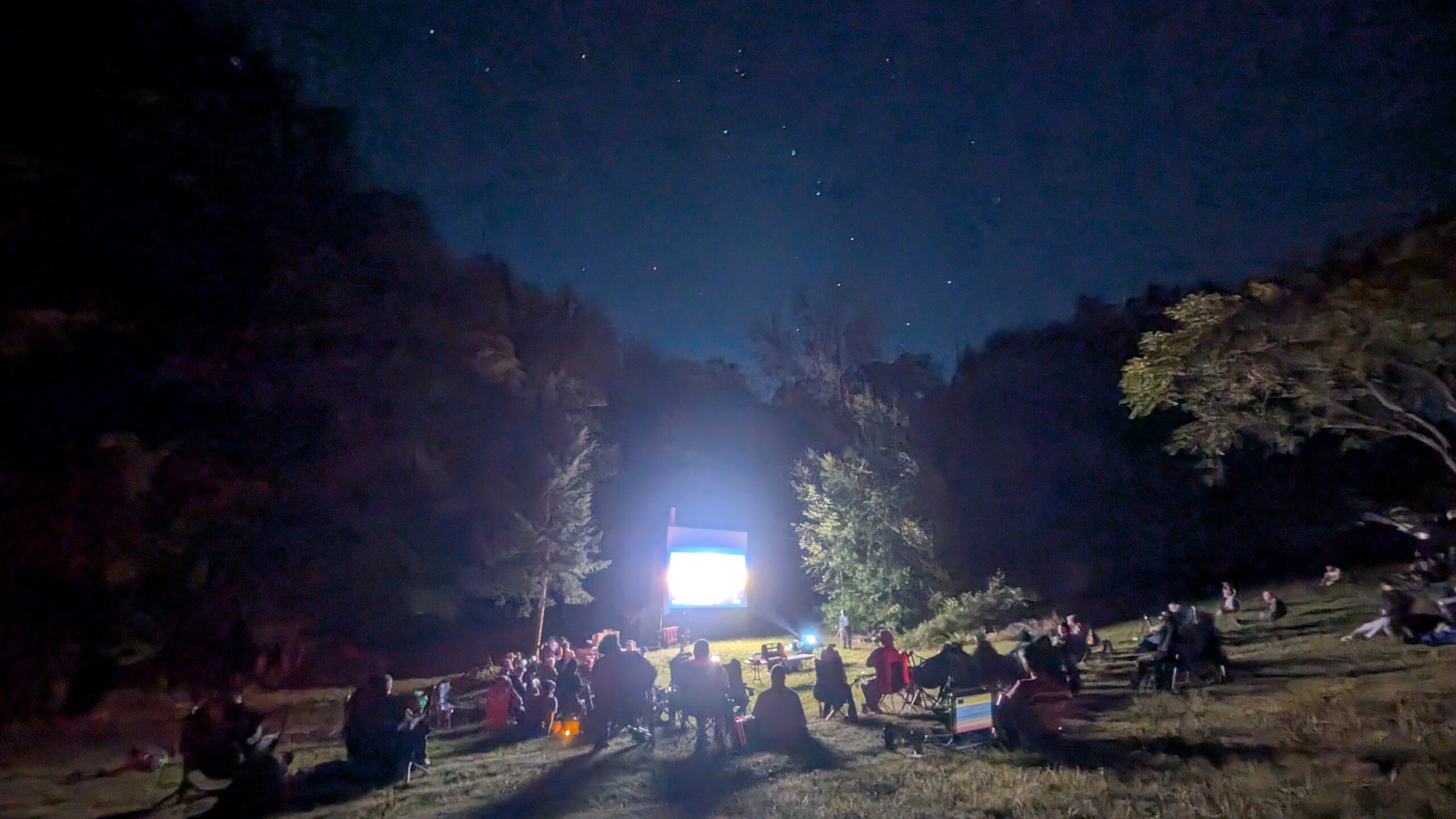
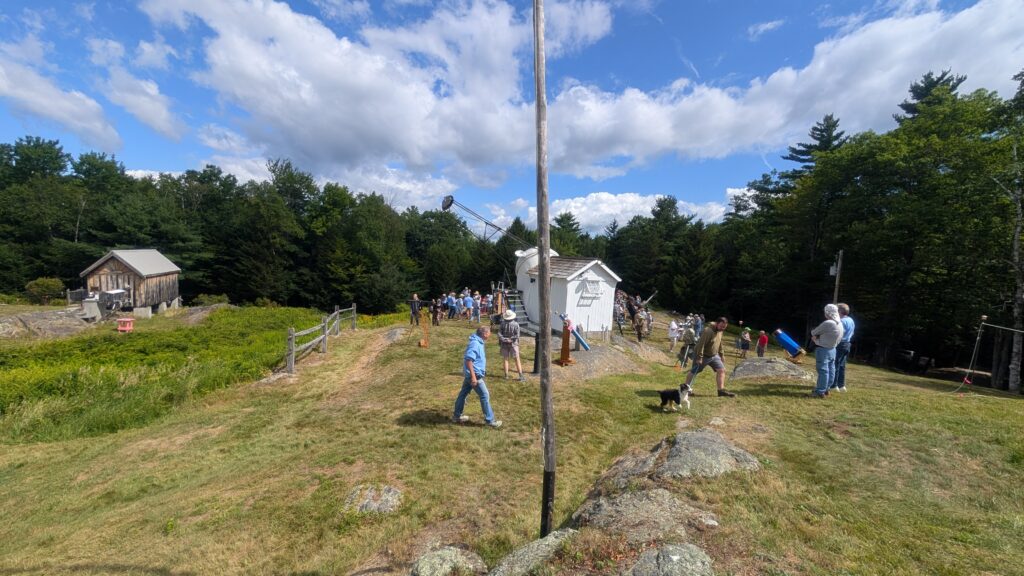
For the second time, Jodi and I participated in the annual Stellafane Convention. Last year, I was a speaker at the pre-convention event (The Hartness House Workshop) and then again at the end of the convention. This year, Jodi spoke at the workshop and then both of us participated in events at the convention. It was a chance to renew acquaintances, meet new people (especially young astronomers looking to their own future careers), and learn new things. Here are some scenes from three days at Stellafane.
Clear Skies
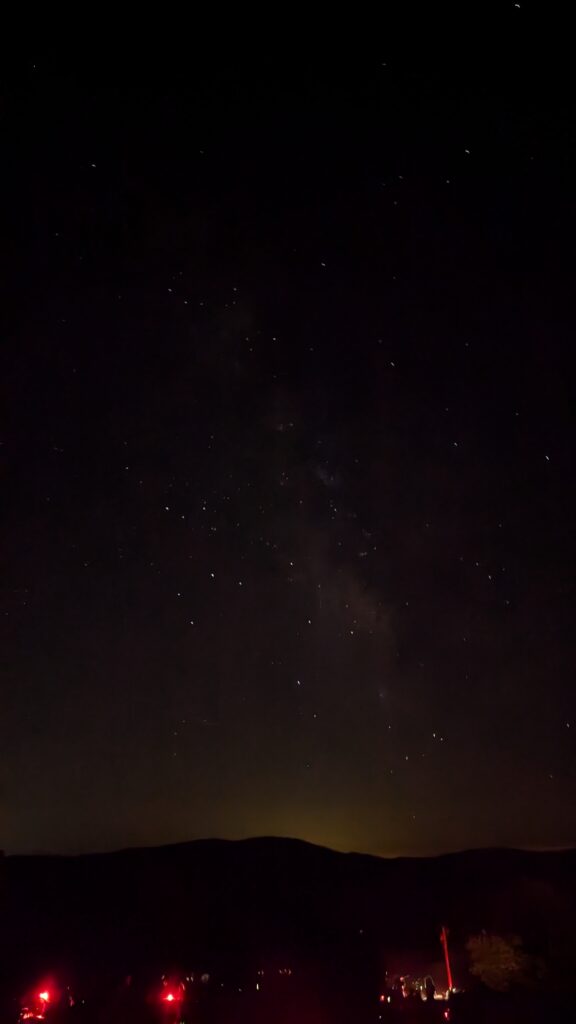
“Clear skies.” This is the refrain of the astronomy community, the “break a leg” well-wish of all who have a longing to look at the stars. Last year there were some dicey nighttime conditions and not all evenings were good viewing. This year, the skies were clear at night the entire time.
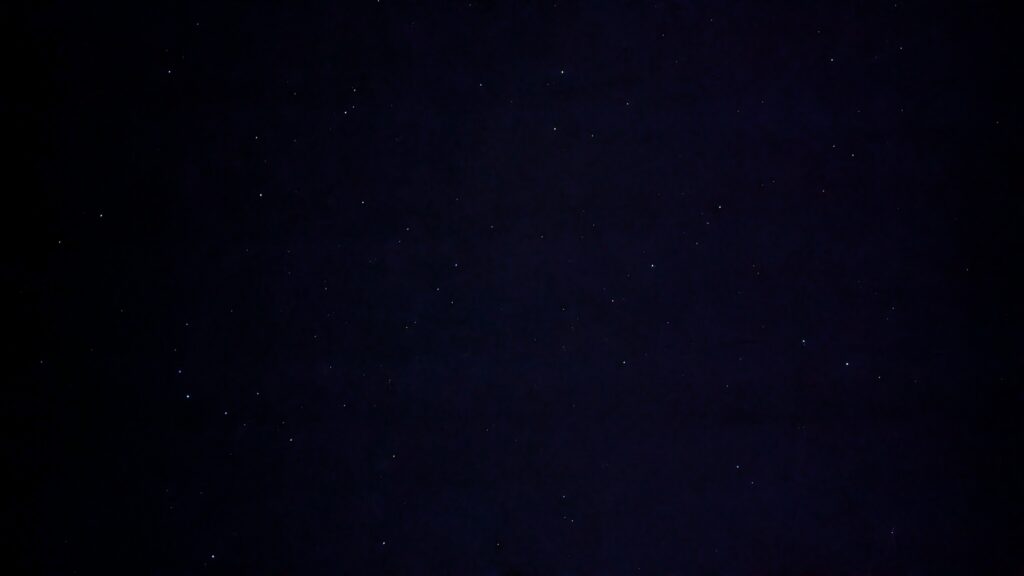
Since Stellafane’s locations, Breezy Hill and Stellafane East, are dark sky locations, the viewing was incredible. At the McGregor Observatory, with its sliding roof, we were treated to views of M3 (a globular cluster) 1https://en.wikipedia.org/wiki/Messier_3 and M17 (the Omega Nebula)2https://en.wikipedia.org/wiki/Omega_Nebula. The Milky Way was clear as a bell, and made even clearer by taking a few second exposure with “night sight” on my Pixel 9.
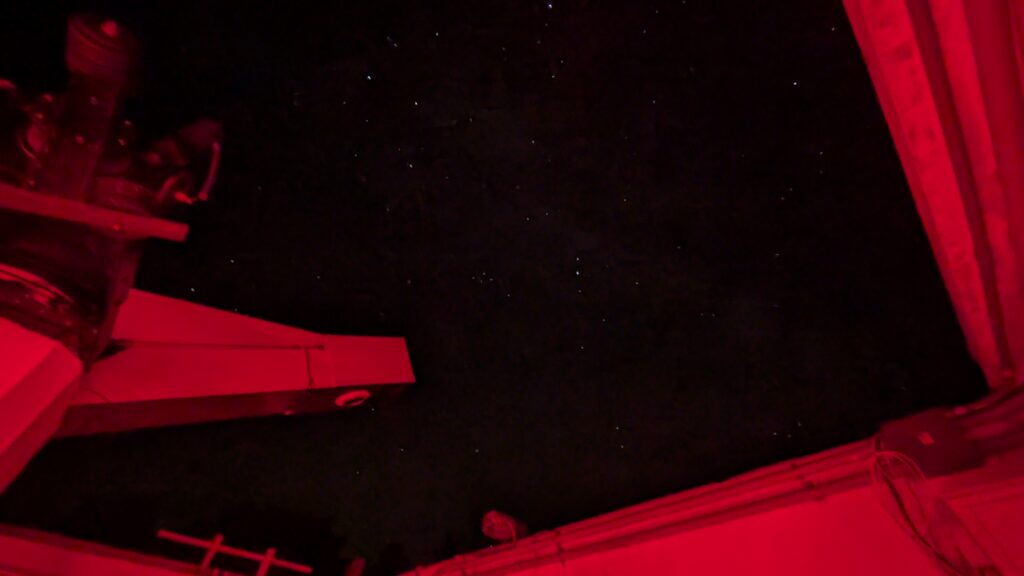
Since Jodi and I were the only particle astrophysicists at the convention, it was really fun to engage with people in chit chat about dark matter and neutrinos. These are captivating ideas because they are so strange. Photons and dark skies are the foundations of all astronomy, and amateur astronomers deeply embrace these and take these ideas into amazing mechanical and optical places. The concept of using a particle that doesn’t interact with light (the neutrino) to do astronomy seems nuts. Even nuttier is the ideas that all those dark places where an optical telescope doesn’t find much of interest are precisely the places where dark matter fills space. Stellar motion can reveal dark matter, and dark matter shapes stellar motion.
It was especially wonderful to engage in these conversations while we all tried to sneak a peak at the sky.
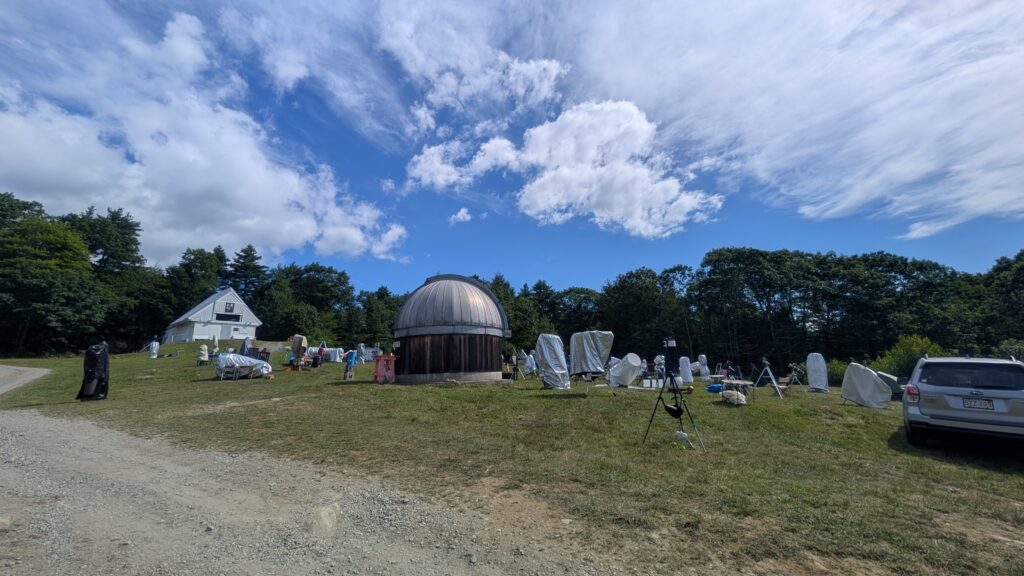
And, oh, the telescopes!
The highlight of the convention is to learn about (and look through) the telescopes that people build and bring to the event. Many of them also compete in mechanical and optical events where they are judged by members of the Stellafane Telescope Makers organization. There are telescopes with novel mechanical and optical inventions, telescopes made from novel or recycled materials, and even ingenious technology that supports sky viewing, such as new observing chair designs.
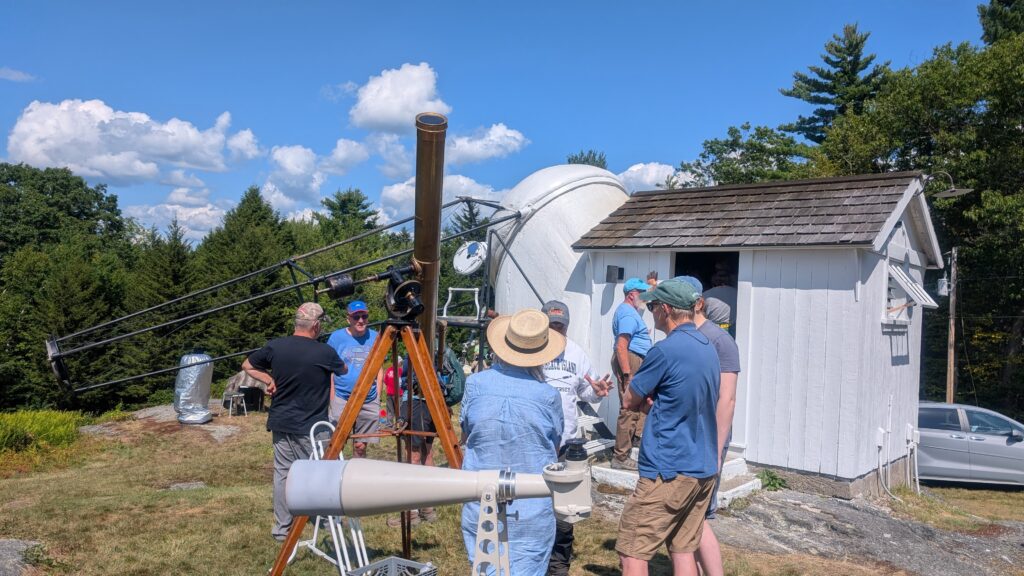
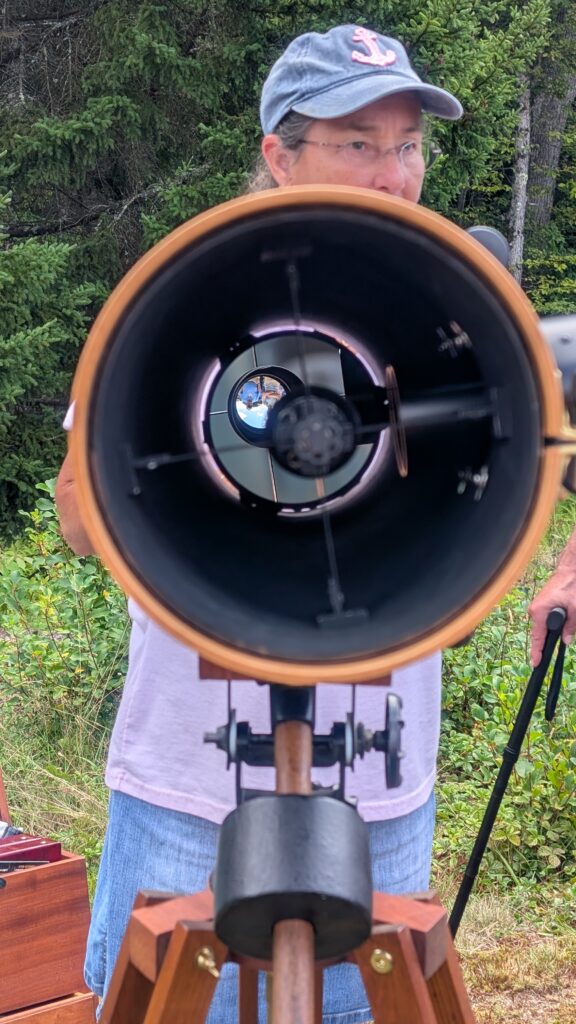
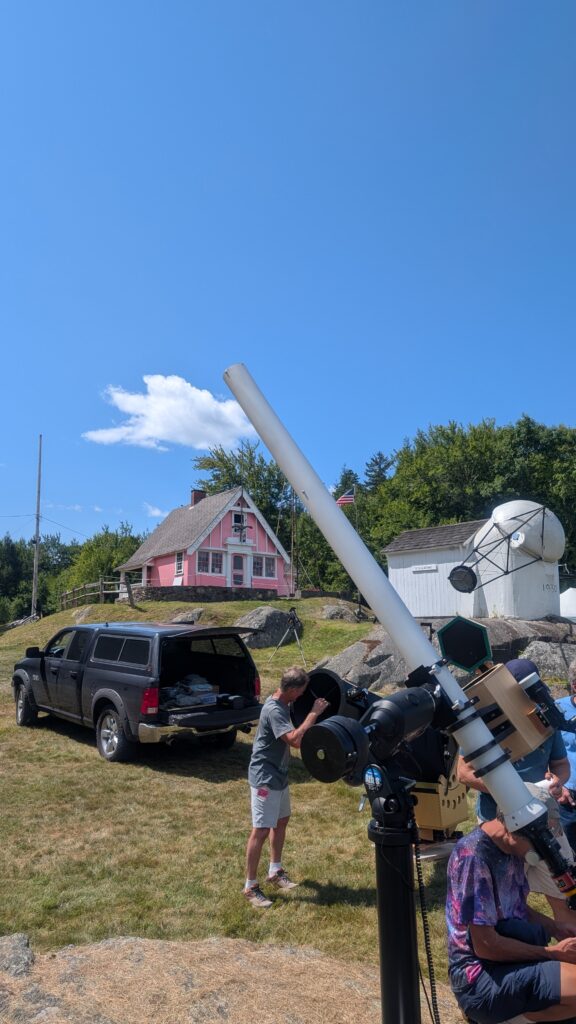
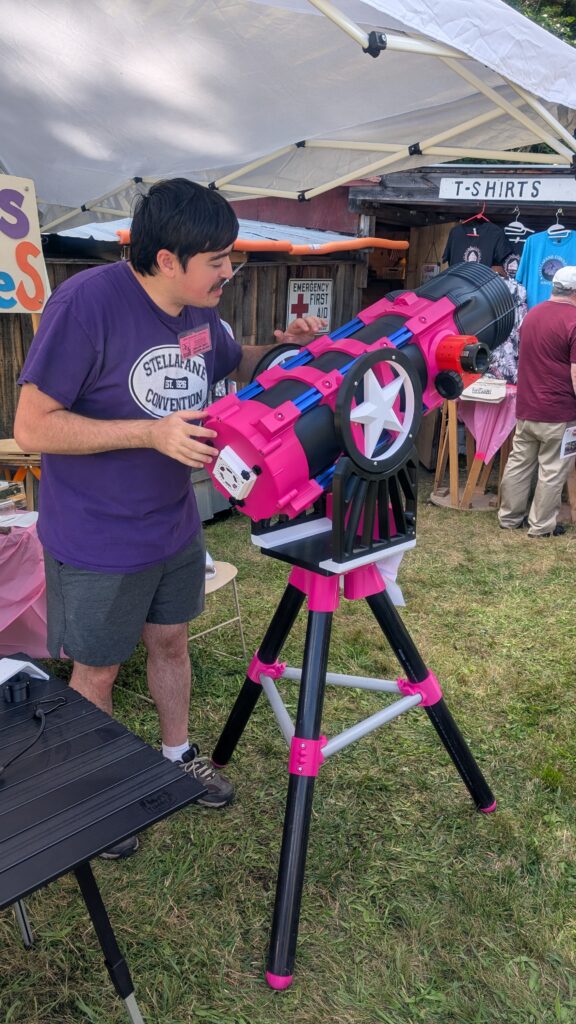
It was delightful to view solar flares (“prominences”) off the side of the sun, as seen through a custom solar telescope. The crafting that goes into these telescopes, from novel optics to precision balancing and pointing, is incredible. It was also a delight to see a fully 3-D-printable telescope concept showcased, including a separately assembled tripod based on tubing and 3-D printed parts that collapses and stores in a very clever way.
And the sky, full of stars
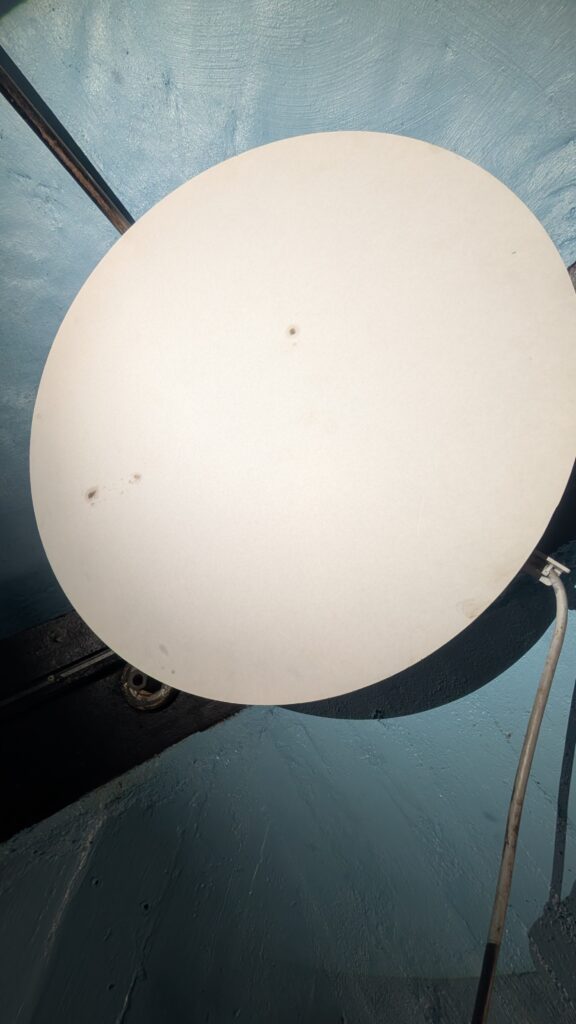
One of my favourite things is solar viewing. We have learned so much from our own parent star, and it’s a joy to observe it. The Porter Turret Telescope, a 12-inch f/17 instrument with an equatorial mount, can track the sun and projects an image of the star on the interior wall. Seeing sunspots is a breeze with this telescope, and the sun is very active right now (we’re about 2 years past solar maximum).
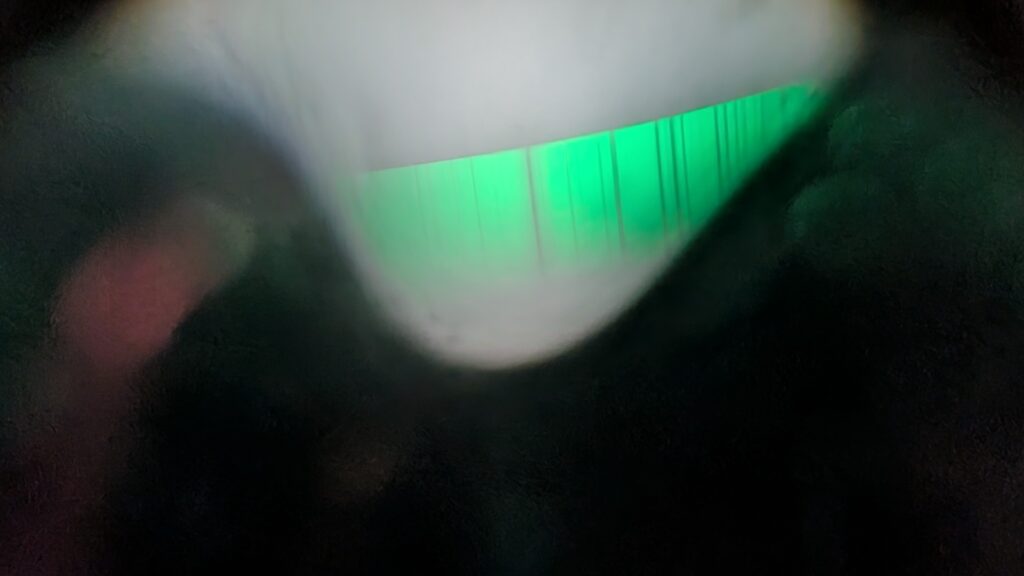
In addition, just down the hill from the Porter Turret is a Spectrohelioscope that once lived at UPenn and now lives very well at Stellafane. Through this, you can see solar prominences and view parts of the solar spectrum. This Stellafane, the spectroscope was trained on the magnesium lines of the sun (in the green part of the spectrum).
And all the things learned…
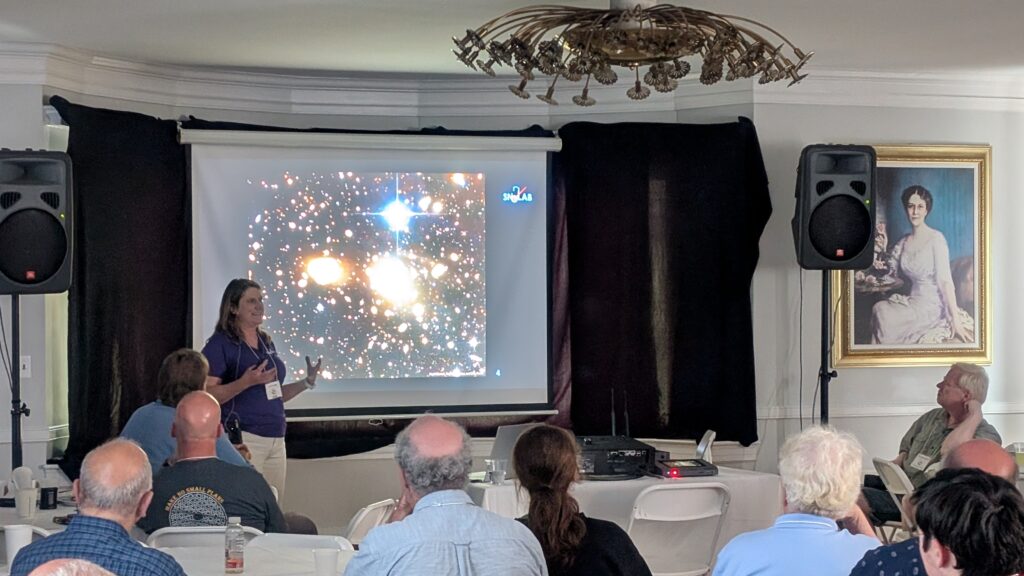
The Hartness House Workshop precedes the convention and provides additional intellectual stimulation for participants who arrive early. The workshop features about a dozen talks by amateurs, professionals, artists, leaders … you name it. People pack into a small ballroom at the Hartness House and spend the day sharing information, asking questions, and building connections.
It was a joy to reconnect with two 2025 Stellafane participants (a mother and daughter) who asked great questions after my ’25 keynote lecture. We recognized each other and spent chunks of the day at the workshop chatting on everything from the daughter’s plans for college and her career to our favourite science fiction movies and books. I wasn’t sure how many people I would remember from last year’s event (it was a bit of a whirlwind since it was my first Stellafane and I have two talks), but I was delighted to remember lots of people and that they remembered us!
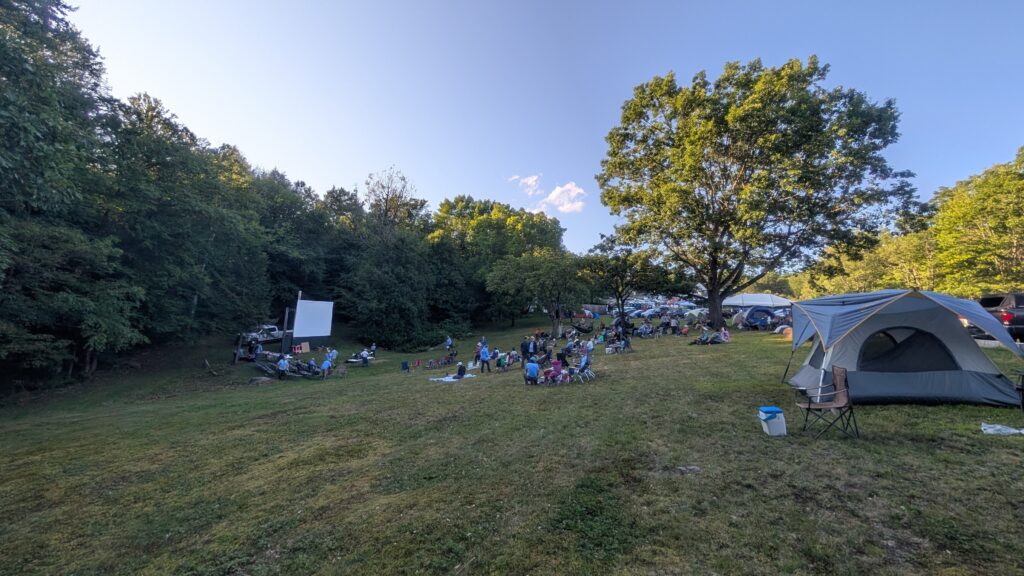
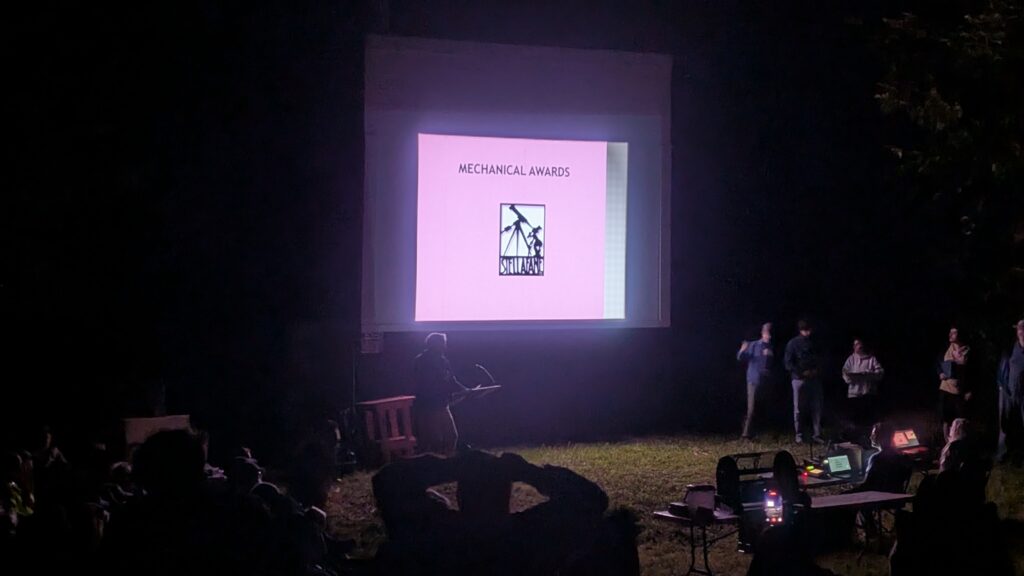
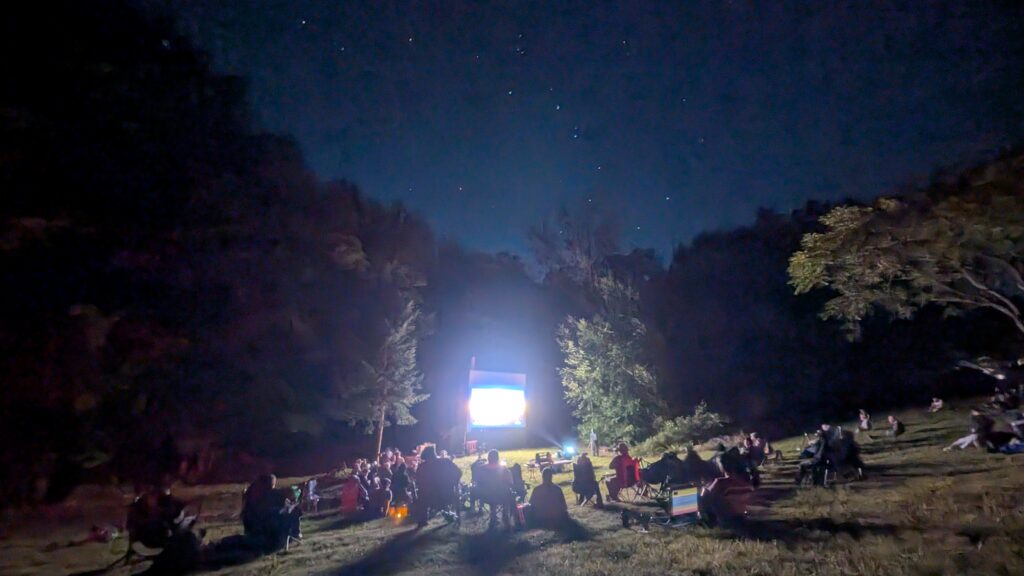
It was a relief that neither of us was involved in the final program of the convention. We could just put down a quilt, sit and relax, and enjoy the cool and darkening evening. The stars came out and the program proceeded, with all the usual final evening events: a raffle, awarding of telescope competition prizes, and a final keynote lecture. This year we were educated in modern dark skies initiatives and the importance of spreading the word about dark skies.
After all, life on earth generally depends on day-night cycles for sleep, navigation, migration, reproduction, feeding, and other critical basics. Too much light at night disrupts all of that, for people and other living things on the surface. The pollution of low-earth orbit by promiscuous permitting and aggressive private companies will change the night sky over the coming years and decades, and risks debris raining down on rural areas and the ruination of the dark night sky. All of us have a right to natural light and dark – in fact, we need it. Before this new era of entrepreneurism goes too forward too fast, people and governments need to achieve consensus on how to protect this basic right. Responsible lighting and responsible satellite stewardship will make all the difference. It’s not about going dark or giving up satellites. It’s about being good stewards of the night.
Beautiful spaces
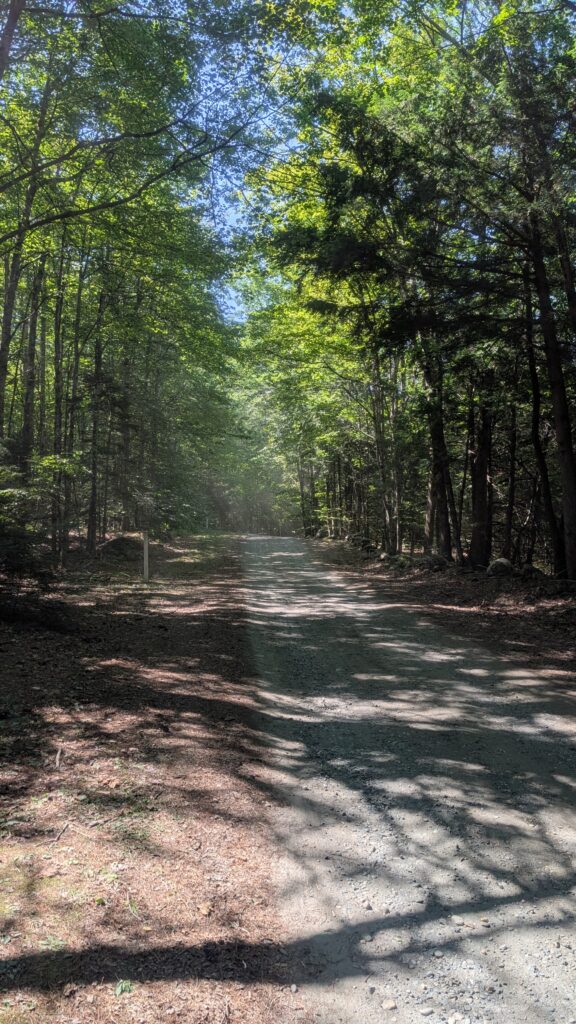
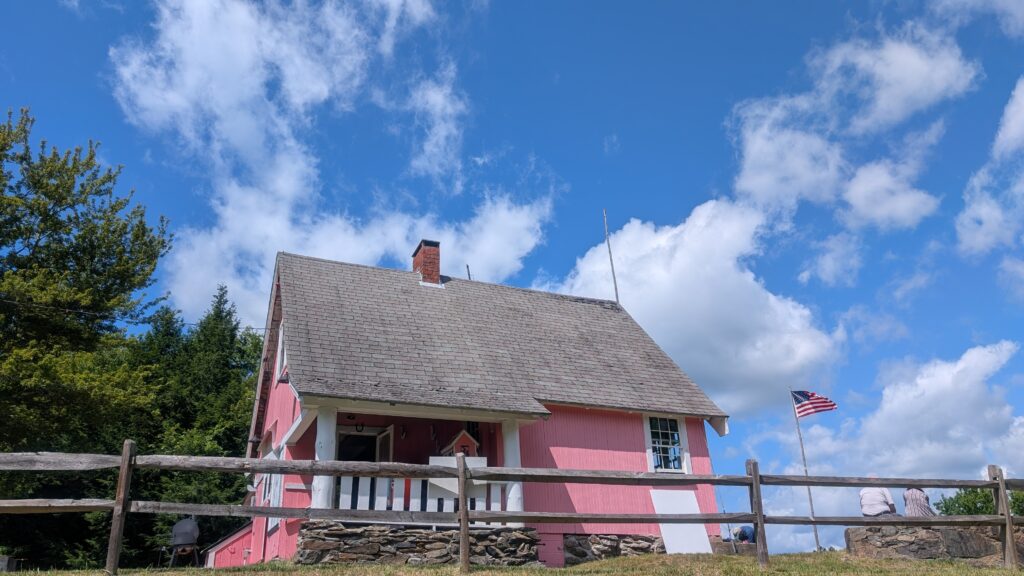
Stellafane is a beautiful location and half the fun is walking it. We joined a walking tour of the history of the grounds, including very old stone fences built by farmers to mark property lines and keep animals on either side of the walls. We also spent a lot of time walking between Breezy Hill and Stellafane East, enjoying the smells and peace of the Vermont woods and taking mental breaks between events and conversations.